
Results of three exploratory studies on the intersections of climate change, conflict, gender and social exclusion in selected localities in the Bangsamoro autonomous region have surfaced several structural realities that privilege men over women, resulting to devastating impacts felt more sharply by women rather than by men. Men and women have different levels of vulnerabilities, owing to social norms in a largely patriarchal society. The adverse effects of both extreme weather events – like flooding and long dry spells (droughts) – are exacerbated by pre-exiting deficits in gender relations and dynamics of social exclusion. All these provide a compelling case for adopting more participatory processes in planning and decision-making, (planning with rather than planning for), especially in terms of responding to human-induced disasters (armed conflicts) and those created by extreme weather events contributing to climate change.

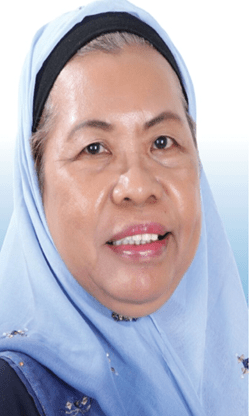
Rufa Cagoco‐Guiam has “changed tires”, or retired from Philippine government service as Full Professor III, Sociology Department, College of Social Sciences and Humanities, of the Mindanao State University – General Santos City, since December 2016. She is a professionally trained cultural anthropologist, both at the Silliman University (MA Anthropology) and at the University of Hawaii (non-degree) for her advanced studies in the same field. Since her retirement, Prof Guiam has been engaged in various social development consulting with various offices and agencies in the Bangsamoro Autonomous Region, focusing mainly on the following themes: gender and social inclusion, and peace and conflict studies.
Prof Guiam has published numerous articles and chapters in books, largely focused on the following topics: child soldiers, gender and armed conflict, gender and livelihoods among internally displaced communities, peace and development communities, illegal drug trade and its intersections with political violence and armed conflict in Muslim Mindanao; and lately, on transitional justice in the Bangsamoro communities in Mindanao.
She is a Senior Asian Public Intellectual (API) Fellow of The Nippon Foundation in 2008-2009 and an Executive Education Grantee of the Institute of Politics, Harvard School of Government, Harvard University, in 2009. She recently was a visiting scholar at the College of Intercultural Communications, Rikkyo University, Tokyo, Japan in October 2018.
Currently, Ms. Guiam is one of the Conveners of the Independent Working on Transitional Justice – Dealing with the Past (TJ – DwP), an offshoot of her two-year engagement as the Lead Coordinator of the Listening Process of the Transitional Justice and Reconciliation Commission (TJRC) in the Bangsamoro. The TJRC was part of the Joint Normalization Committee provided for in the Comprehensive Agreement on the Bangsamoro (CAB) signed between the Philippine government and the Moro Islamic Liberation Front. She used to do a variety of consultancy work, in particular with the UN Women (mapping of initiatives to prevent Violent Extremism in the Bangsamoro and for the Conciliation Resources, London, for inclusive localized peace platforms; and more recently with the Asia Foundation and the UNICEF for projects providing technical assistance to the new government in the Bangsamoro. In between her consultancy work, she writes a fortnightly column in the Opinion Page of the Philippine Daily Inquirer (PDI), under Kris-Crossing Mindanao (starting last June 18, 2018).
Click here to proceed to the conference page.

 Bangsamoro Research and Legal Network